

Proposals to amend the Land Law this year
According to the Ministry of Agriculture and Environment, in nearly two years since the implementation of the 2024 Land Law, the National Assembly and the Government have issued more than 26 documents to amend, supplement, and guide its implementation in order to resolve difficulties and obstacles in its execution.
Notably, the operation of a two-tiered local government model, along with the requirement to promote decentralization and delegation of power, has necessitated further refinement of land-related legal regulations. Many provisions currently regulated by decrees need to be codified into law to ensure stability, consistency, and long-term sustainability.
In its submission to the Government regarding the proposal to add the draft Law amending and supplementing a number of articles of the Land Law to the 2026 legislative program, the Ministry of Agriculture and Environment stated that amending the Land Law is an urgent requirement to institutionalize the major policies of the Party, especially the resolutions on economic development, innovation of the growth model, and improvement of the legal system.
At the same time, this is also an important solution to meet the target of double-digit economic growth in the period 2026 - 2030.

The Ministry of Agriculture and Environment proposes that the Government report and propose to the Standing Committee of the National Assembly to add the amendment of the Land Law to the National Assembly's 2026 legislative program, with the expected time for submitting this draft law to the National Assembly for comments and approval at the October 2026 session of the National Assembly using a simplified procedure.
The draft amendment to the Law is expected to focus on two main groups of content.
This group of content meets the requirements for national development in the new era and the need for double-digit economic growth.
The Ministry proposes amending and supplementing several articles of the Land Law to include provisions on mechanisms and policies to address difficulties and obstacles in the implementation of the Land Law through the codification of regulations in National Assembly Resolutions and Government Decrees and Resolutions such as land prices, land price tables, land price adjustment coefficients; land use fees, land lease fees; land acquisition, compensation, support, and resettlement;
Registration and issuance of land certificates; land use planning and plans; land allocation, land leasing, permission for land use conversion, selection of land lease forms, land subdivision, land consolidation; land use regimes for certain types of land; land information systems, and land dispute resolution.
Simultaneously, amendments and additions were made to regulations on land use planning and plans at the commune level; the rights and obligations of rice land users; the rights and obligations of land users who violated land laws before July 1, 2014; compensation in special cases; and the land use regime for certain types of land.
The second group consists of regulations on decentralization, delegation of power, and delineation of authority according to the two-tiered local government model, and administrative reform in the field of land.
The Ministry proposes amending and supplementing regulations on the authority to implement state management of land to align with the two-tiered local government model; and adding a new provision on the authority to implement state management of land.
In addition, revise and supplement regulations on administrative procedures related to the provincial level and review them to ensure consistency and uniformity within the legal system with other laws and resolutions.
Source: VTC News.
RELATED NEWS
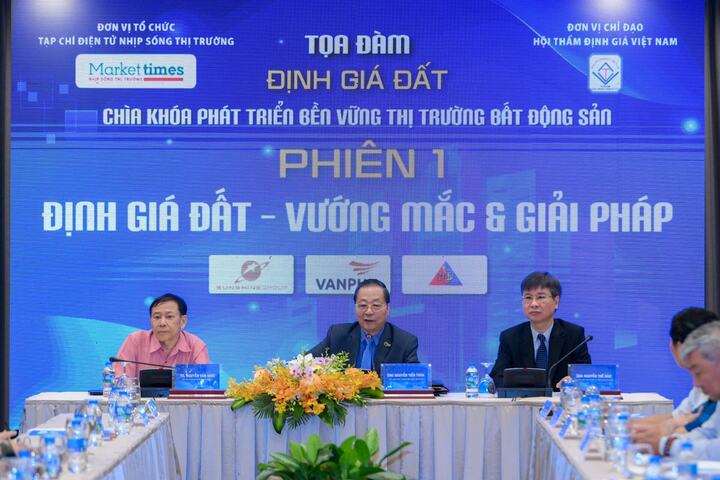
(VTC News) - Theo các chuyên gia, để định giá đất chính xác, cần ban hành bộ tiêu tiêu chuẩn định giá riêng cho từng nhóm bất động sản.

Ho Chi Minh City (HCMC) will launch “System 45” in the second quarter of 2026 to unlock investment resources and resolve legal bottlenecks for 421 long-stalled projects following administrative restructuring.
Local authorities across Vietnam have been instructed to complete the national land database in 2026 as part of efforts to improve market transparency and accelerate digital transformation.

Ho Chi Minh City is accelerating the removal of legal obstacles in the real estate sector with the goal of resolving approximately 60 projects in 2026, equivalent to more than 68,000 houses and commercial/service properties that have not yet been granted ownership certificates.
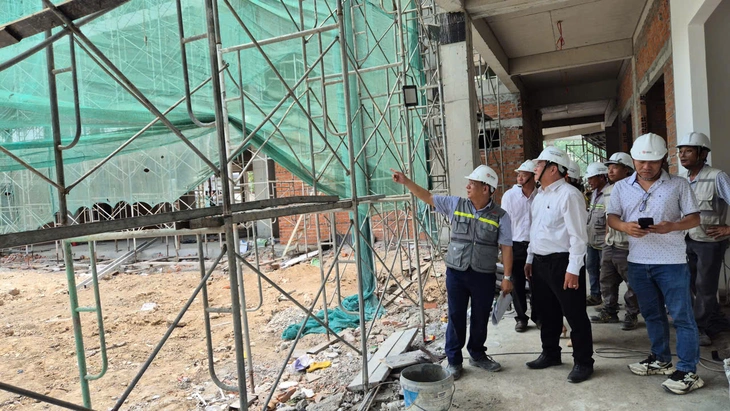
In just three months, Binh Chuan 3 Primary School in Thuan Giao Ward, Ho Chi Minh City, has completed over 60% of its construction. Previously, building a new school took 2-3 years.