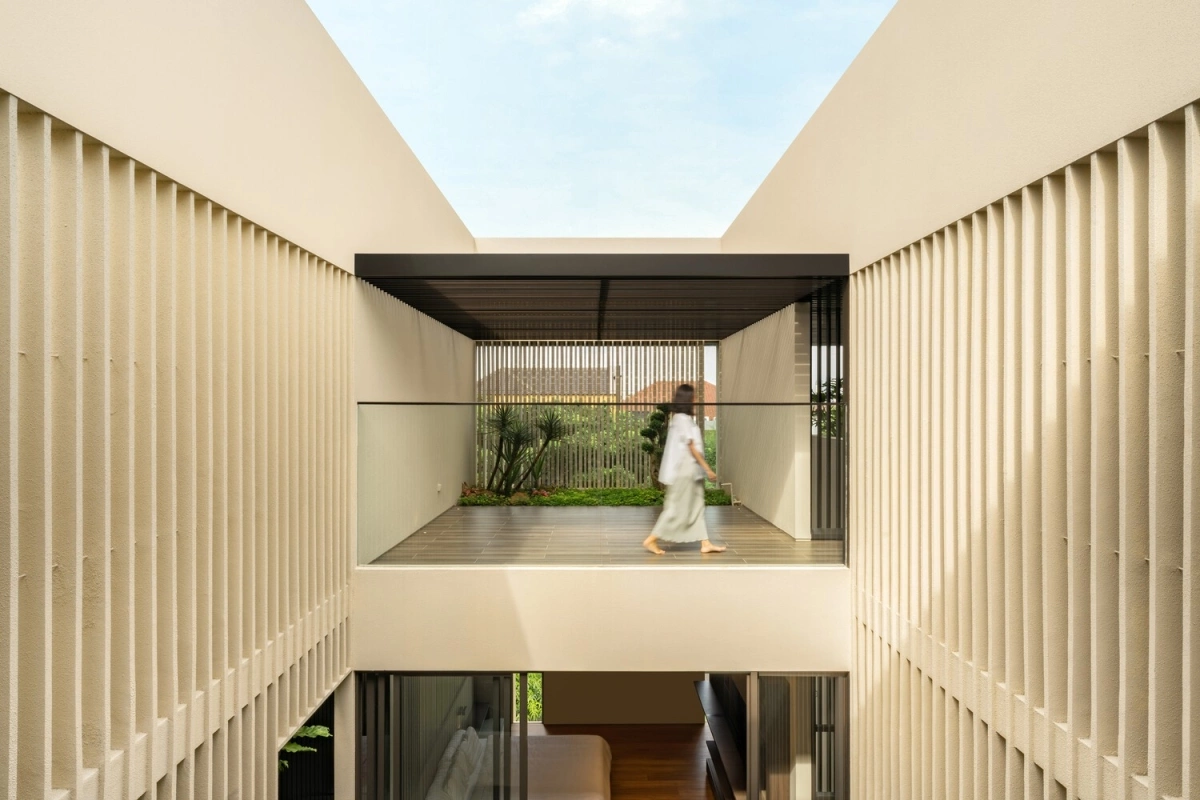


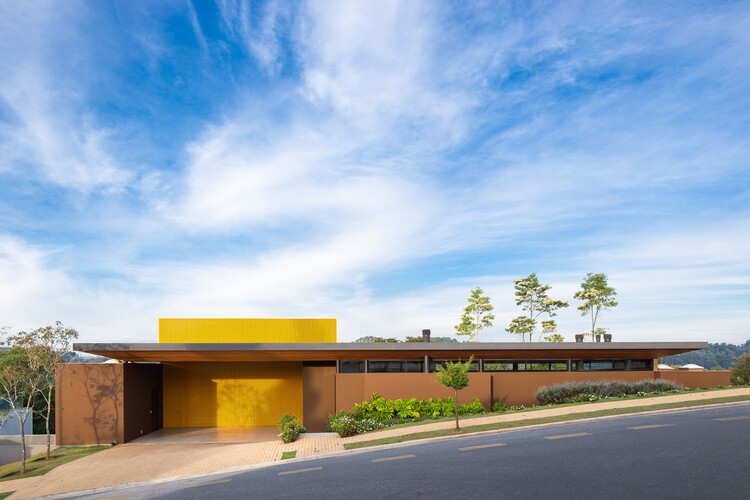
Located in São Paulo, Brazil, this 724-square-meter residence was designed through a careful study of the site's topography and existing landscape. Rather than creating a structure that dominates its surroundings, the architects adopted a low-profile, horizontal design language that allows the home to blend naturally into the environment.
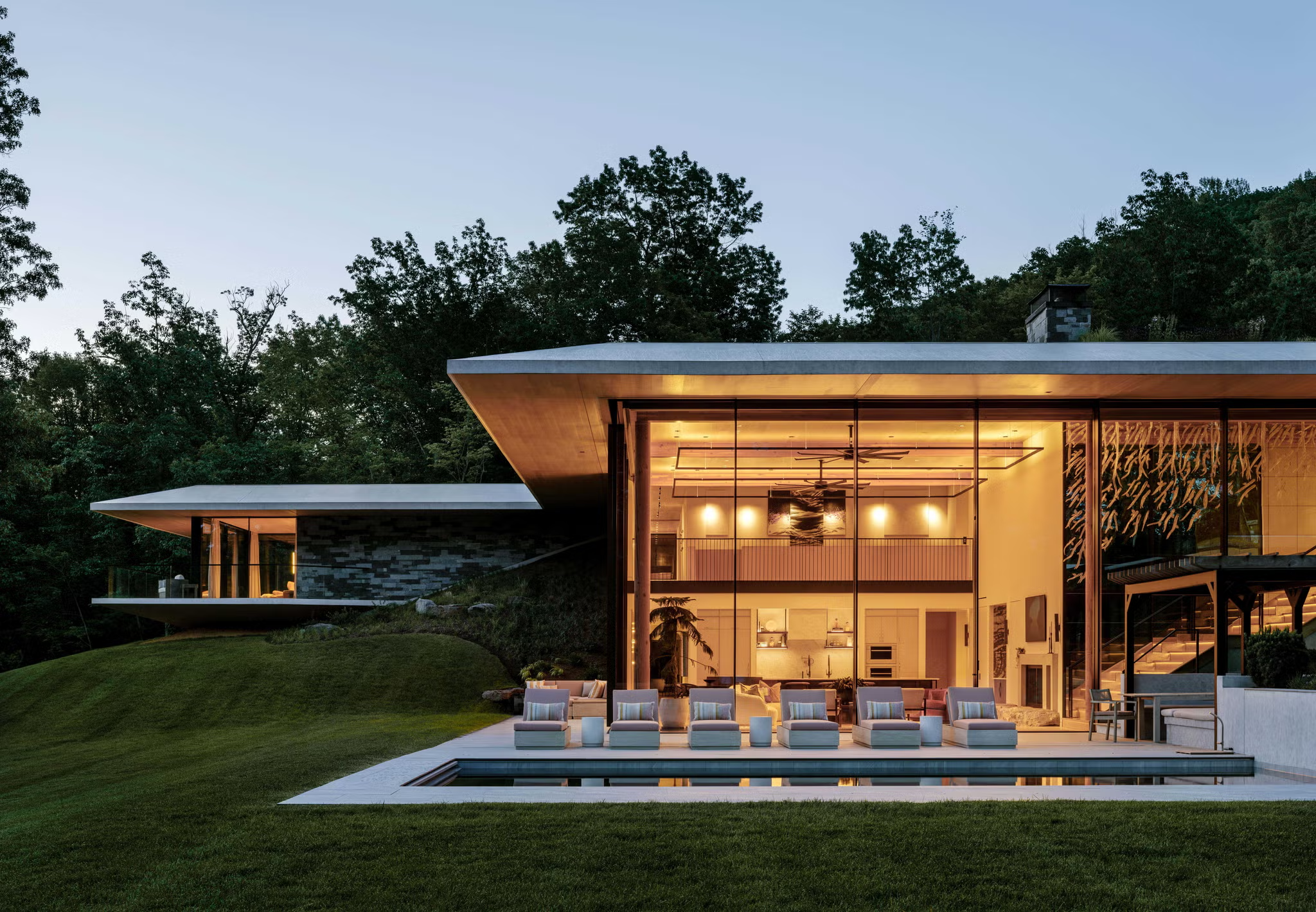
The house is organized across two levels, with the main floor accommodating the family's primary living, leisure, and resting areas. Functional spaces are arranged within a long, linear volume that follows the shape of the site, creating a sense of openness and continuity. Expansive floor-to-ceiling glazing frames views of the garden, terrace, and swimming pool while flooding the interiors with natural light.
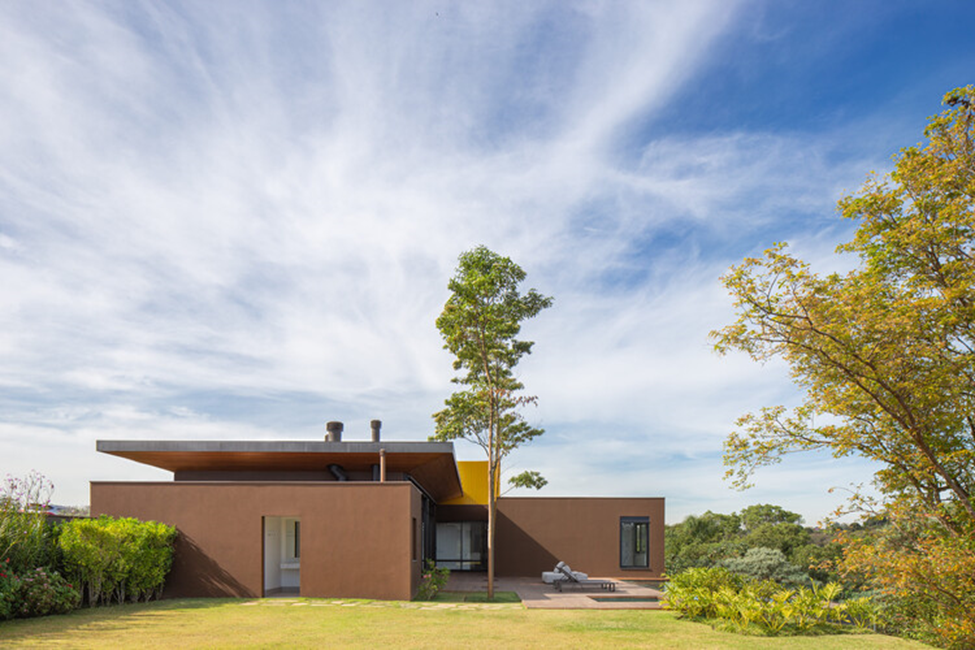
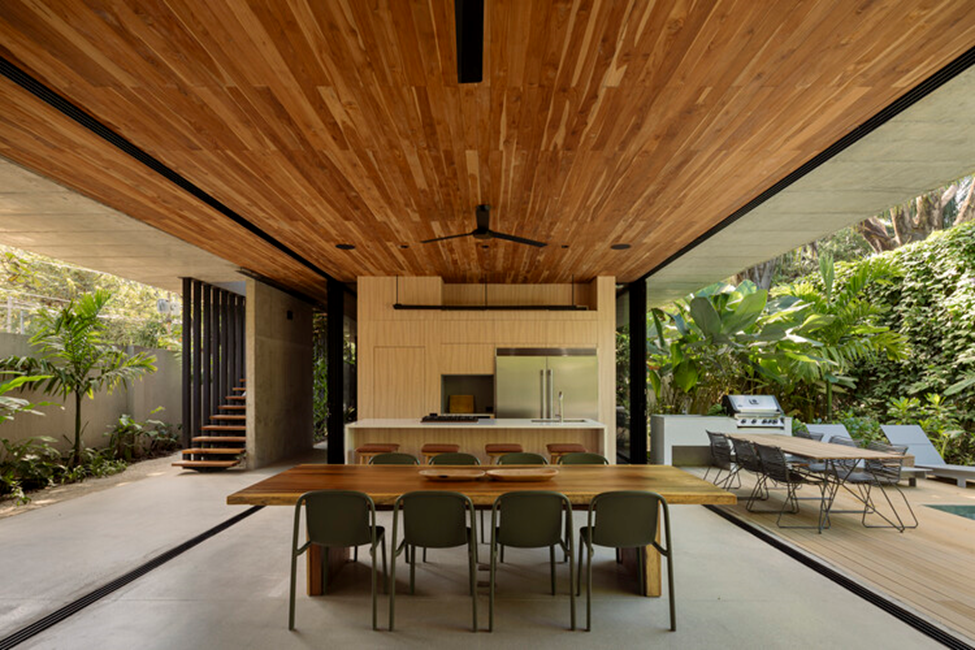
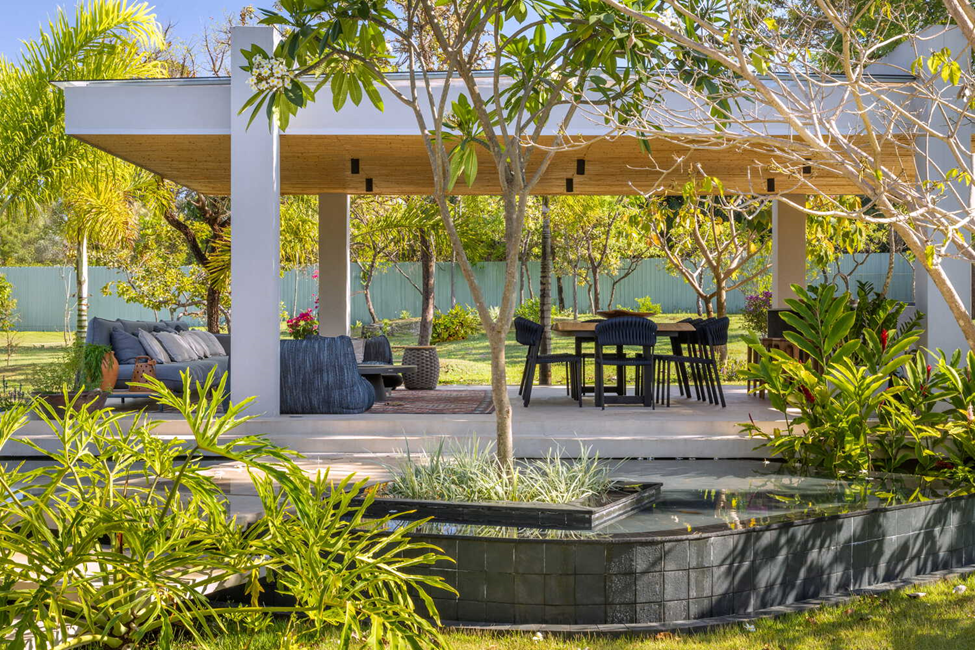
The terrace and swimming pool are directly connected to the communal living spaces, creating an open-plan environment where the boundaries between indoors and outdoors are nearly erased. This seamless connection allows nature to become an integral part of everyday life while encouraging interaction and shared experiences among family members.
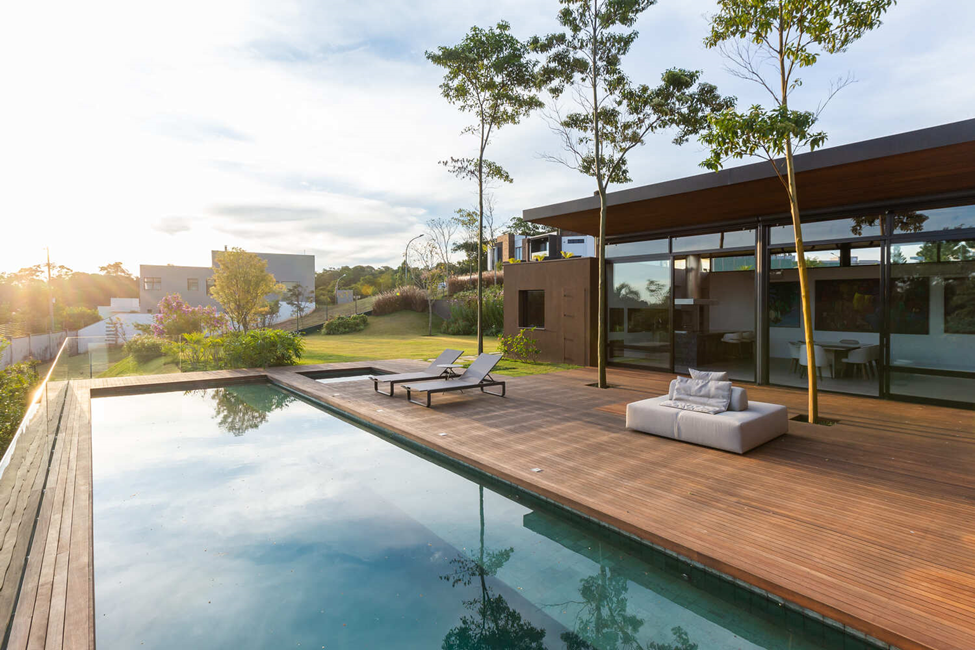
The lower level accommodates additional private spaces, technical facilities, and supporting functions. This organizational strategy allows the upper volume to maintain a light and elegant appearance while enhancing the overall sense of openness throughout the residence.
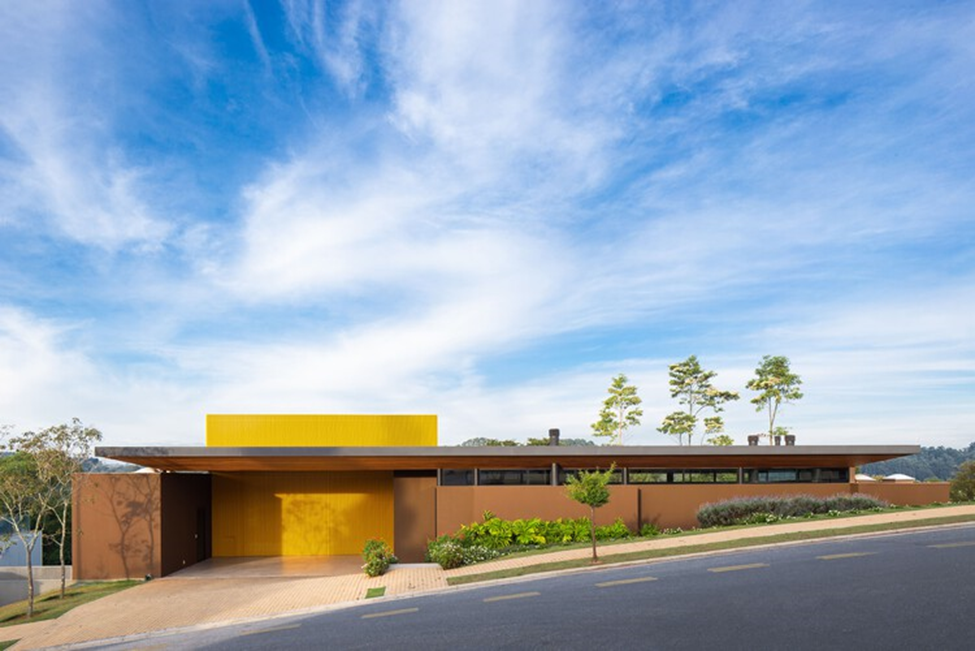
A defining feature of the project is its elongated horizontal composition and generous roof overhangs. Continuous architectural frames and sun-shading elements help regulate sunlight while creating a sense of shelter and comfort. Against a backdrop of neutral materials and tones, a boldly colored architectural volume serves as a visual focal point, giving the home a distinctive identity.
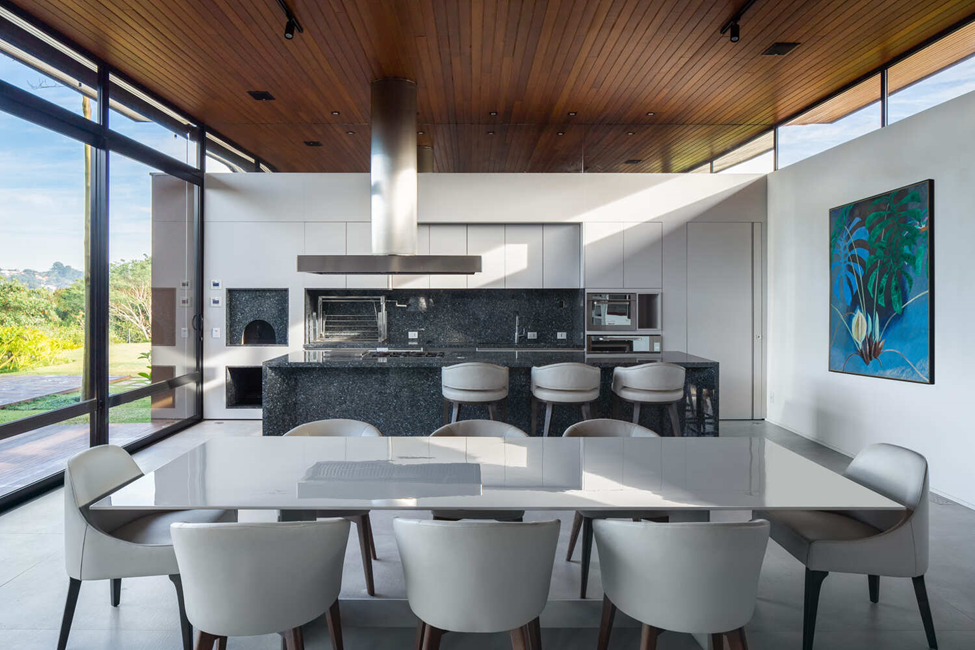
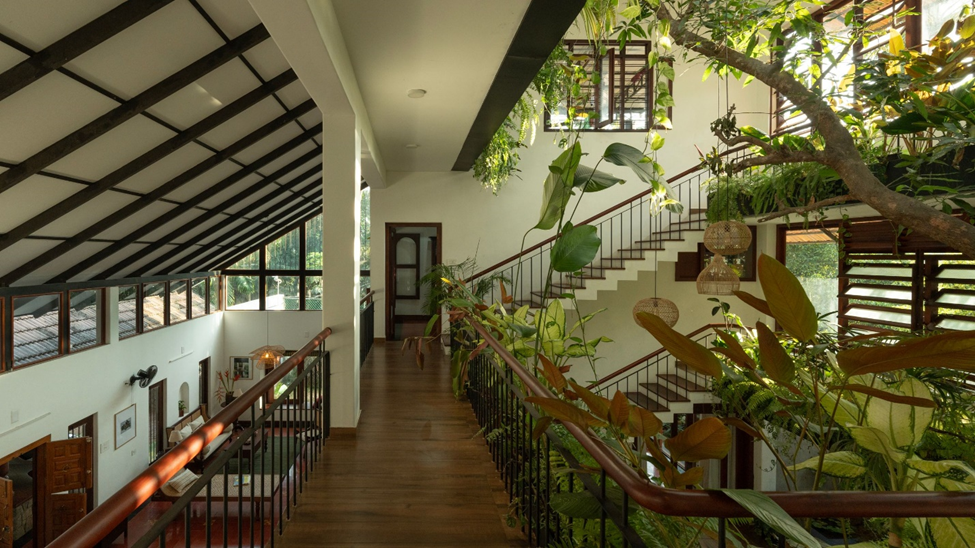
The material palette was carefully selected to reinforce the connection between architecture and nature. Earth-toned surfaces are paired with expansive glazing, achieving a balance between solidity and lightness. Wood is used extensively throughout the flooring and interior finishes, bringing warmth, texture, and a welcoming atmosphere to the living spaces.
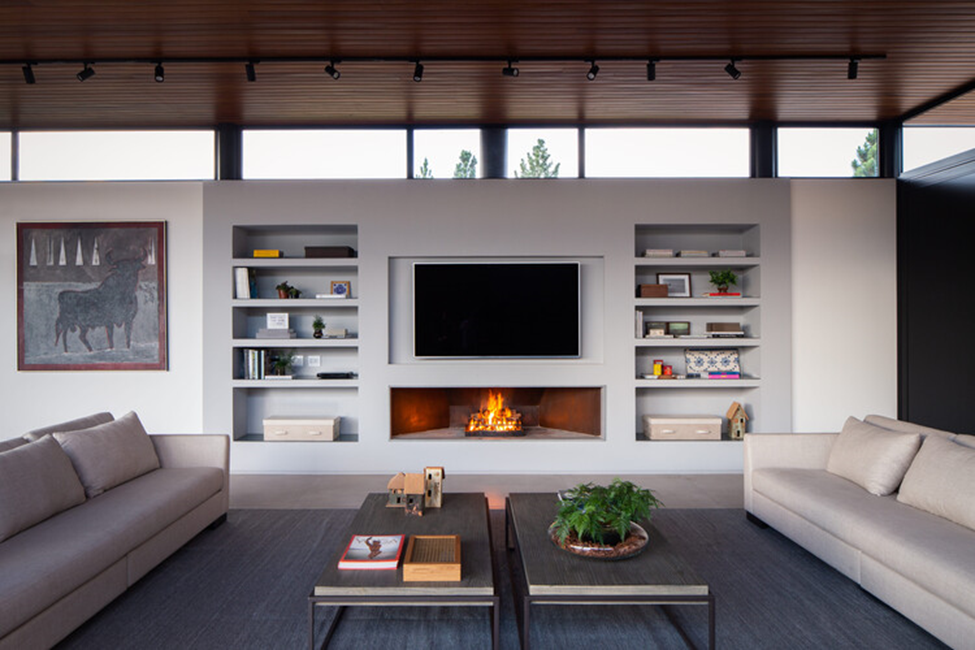
Landscape elements are integrated throughout the property, from the site's boundaries to its courtyards and living areas. The presence of abundant vegetation not only enhances privacy but also strengthens the relationship between the architecture and its natural setting. As a result, the home offers a living experience deeply connected to nature, where indoor and outdoor environments flow together in a continuous and harmonious manner.
Source: ArchDaily.