

Rather than removing the mango tree standing at the center of the site to make room for construction, the homeowners and architect chose to make it the heart of the entire project.
Located in Thrissur, Kerala, India, the 580-square-meter house was conceived as a “green glass house,” where trees, natural light, and fresh air become integral elements of the architecture.

From the earliest stages of site analysis, the decades-old mango tree emerged as the project's most important feature.
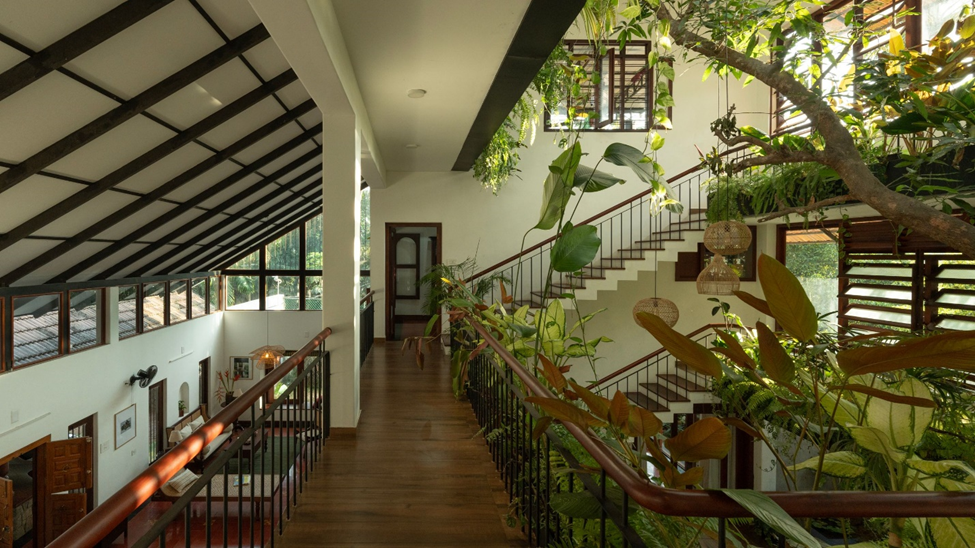
Rather than treating the tree as an obstacle, architect Arjun Joshy chose to preserve it and develop the entire house around its trunk. The result is a spacious central courtyard where the mango tree continues to thrive as part of everyday family life. From the living room and dining area to the upper-level corridors, nearly every view is directed toward this lush green focal point.
A Staircase Wrapped Around the Tree
The greatest challenge of the project was creating circulation between floors without disturbing either the tree's root system or canopy. The solution came in the form of a graceful spiral staircase that curves around the trunk. In many ways, the house appears to have been built to accommodate nature rather than the other way around.
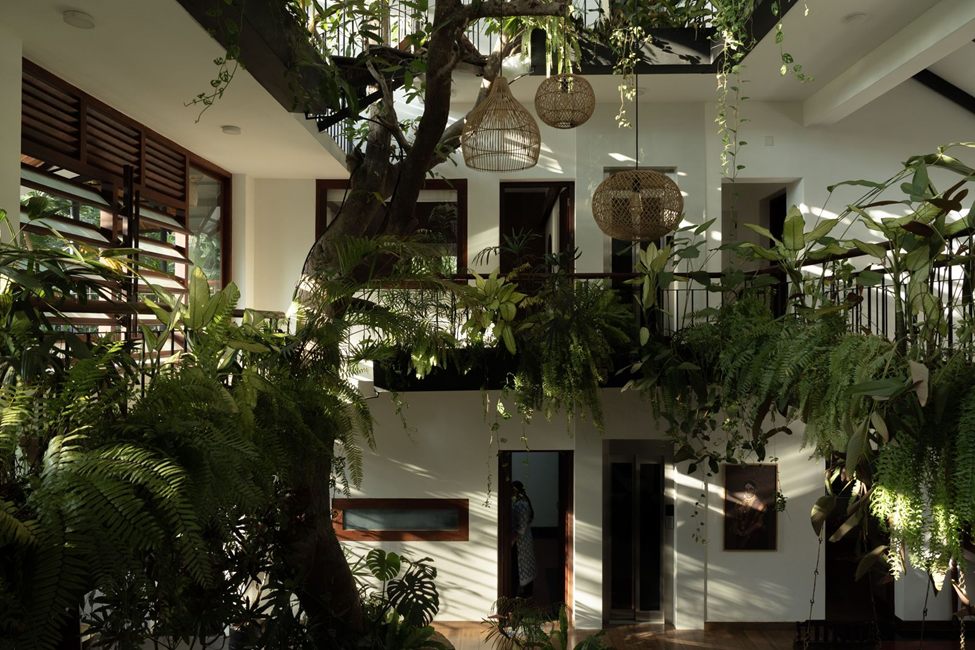
Viewed from above, the staircase becomes a striking architectural feature while offering a unique experience for residents, who pass through the green heart of the house every time they move between levels.
A House for Three Generations
The homeowner, a software engineer, returned to Kerala with his family after the COVID-19 pandemic. His vision was to create a residence spacious enough for three generations to live together while still ensuring privacy for each family member.
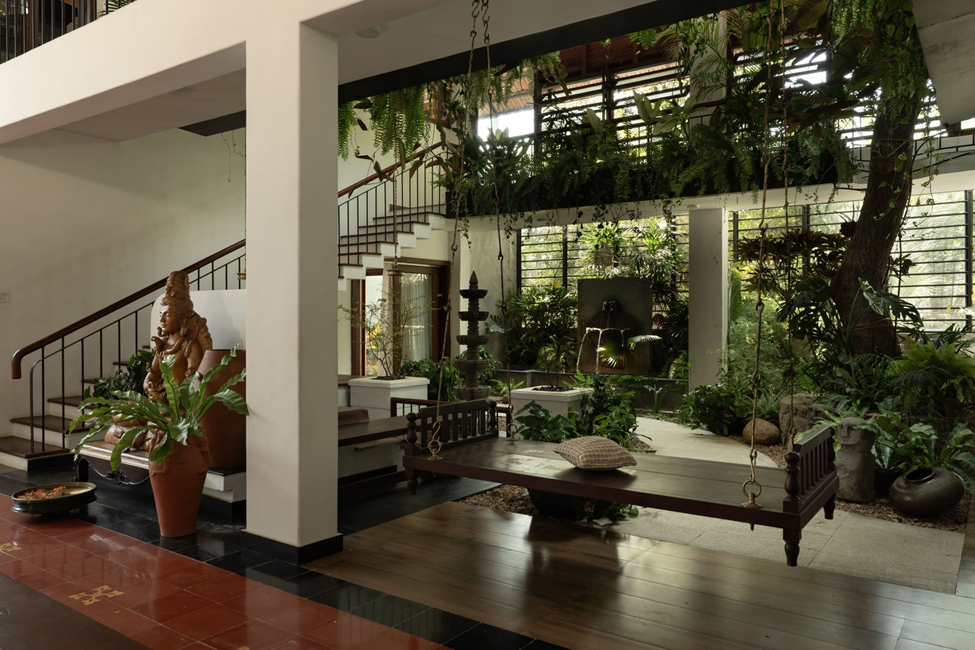
Instead of separating the house into isolated functional zones, the architects used the courtyard as a natural communal living room. Light, air, and greenery serve as the threads that connect family members throughout the day. According to the homeowners, it has become the most frequently used space in the house.
Local Materials and Tropical Architecture
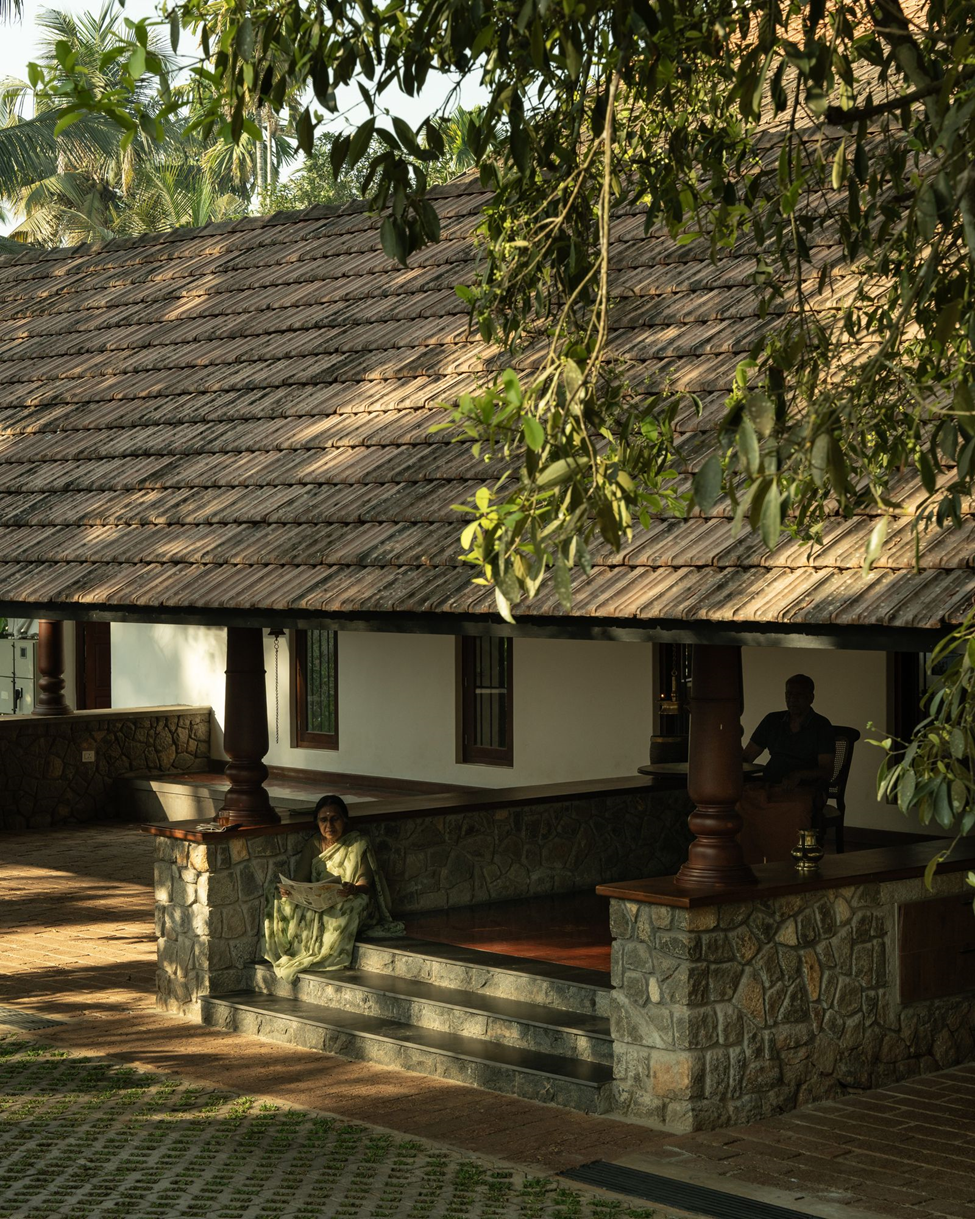
The residence embraces the architectural language of Kerala through its sloping tiled roofs, teak wood doors, exposed brick walls, and natural stone finishes. Many components from an older house previously located on the site were carefully dismantled, restored, and reused in the new construction.
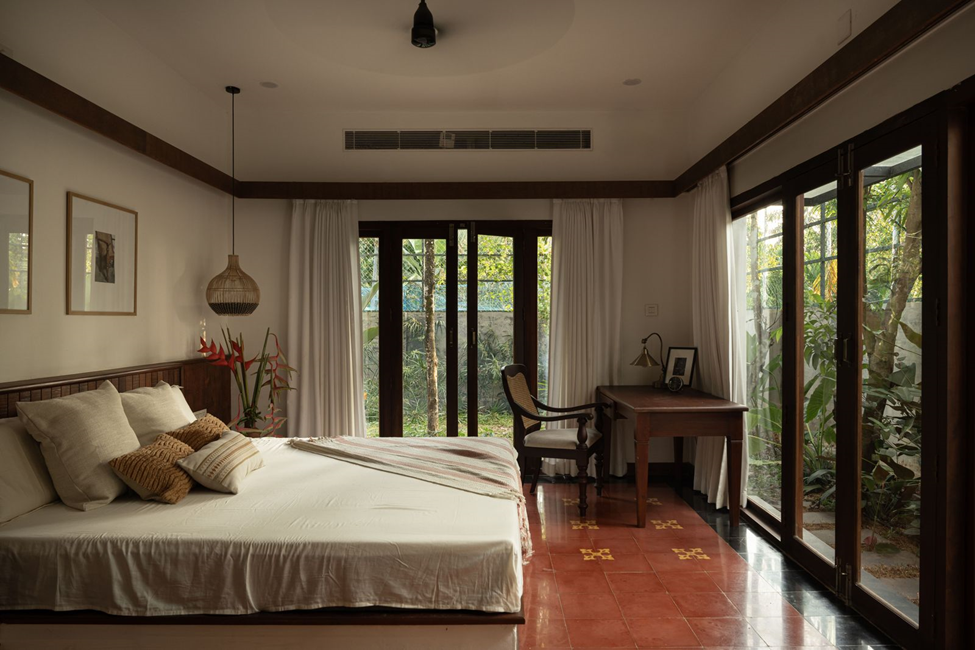
The combination of local materials and contemporary solutions—such as skylights and passive ventilation systems—ensures a naturally comfortable indoor environment while reducing reliance on air conditioning.
When Nature Becomes the House's True Owner
Unlike many contemporary homes that seek to control their surroundings, this residence was designed to adapt to the existing mango tree. Its canopy provides shade for the courtyard, filters changing patterns of light throughout the seasons, and naturally becomes a gathering place for the entire family.
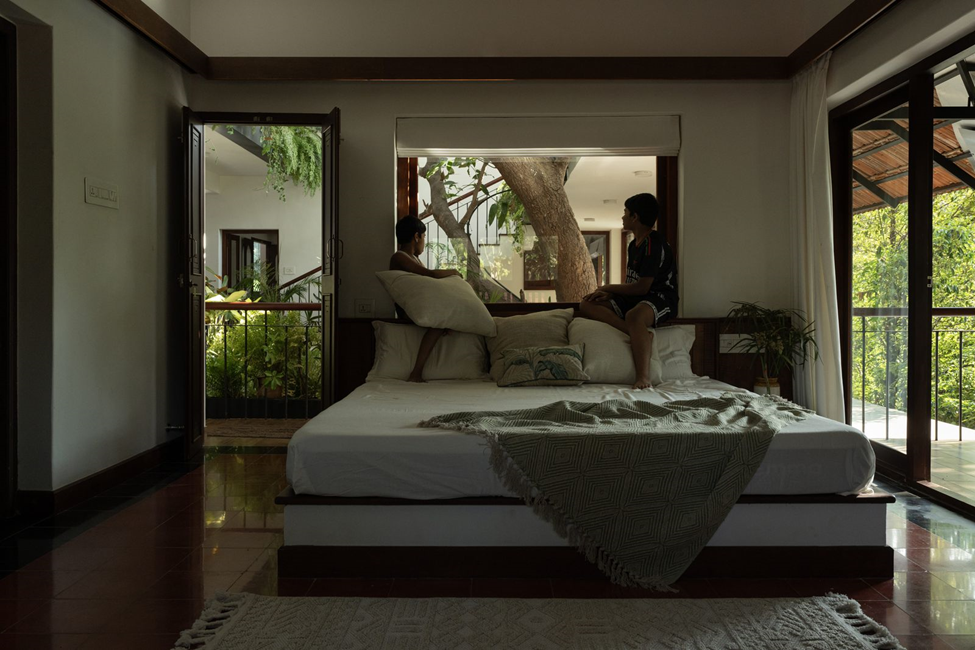
More than simply an architectural feature, the mango tree preserves the memory of the site itself. It transforms the house into a bridge between past and present, connecting generations through a shared relationship with nature.
Source: ArchDaily.